Contents
Cells group together to form tissues. These tissues are made of the same cell types or, in some cases, different cell types.
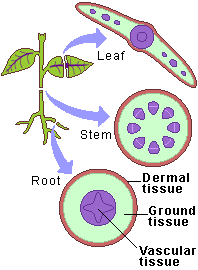
PLANT TISSUES
The 4 main types of plant tissues are dermal tissue, ground tissue, vascular tissue, and meristematic tissue. These tissues are discussed on the Structure of Flowering Plants webpage.
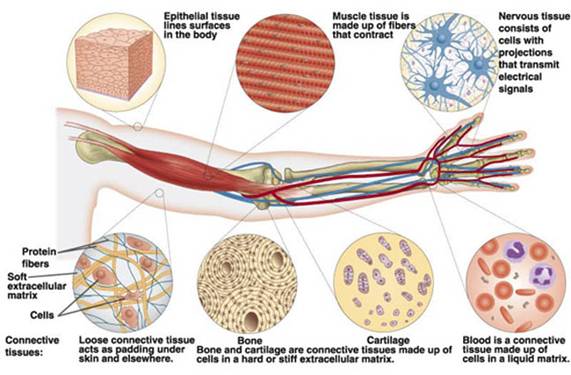
ANIMAL TISSUES
The 4 main types of animal tissues are epithelial tissue, connective tissue, muscular tissue, and nervous tissue. These tissues are discussed in the various web pages of this website. (See homepage)
TISSUE CULTURE
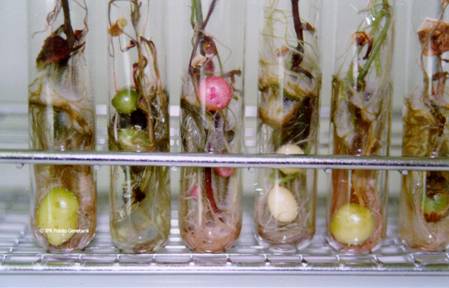
Tissue culture is the growth and multiplication of undifferentiated cells or specific cell types in a sterile nutritive medium in the lab. Hormones and other growth factors may also be present to keep the cell dividing and/or bring about differentiation. This growth of cells and tissues is called in-vitro growth. This is contrasted to in-vivo growth which is growth within the body.
TISSUE CULTURE APPLICATIONS
Micropropagation is a means to grow many plants from a single plant. A single plant is cut into many pieces and grown in a nutrient medium. New plants will form.
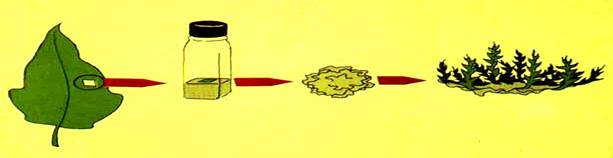
Cancer Research has been done with tissue cultures. Antibodies to fight cancer cells can be produced using tissue cultures. Much more information is available on The Human Defence System webpage.
ORGANS
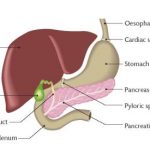
An organ is a group of different tissues working together performing a specific job. Plant organs include roots, stems, and leaves. Animal organs include the skin, heart, liver, and kidneys.
The leaf includes dermal, vascular, and ground tissue. The heart includes muscle, epithelial, connective (blood) tissue.
ORGAN SYSTEMS
An organ system is a group of different organs operating together carrying out a definite task. Animals are composed of many organ systems which all form the complete animal organism. Examples of animal organ systems are the circulatory, nervous, endocrine, and reproductive systems.
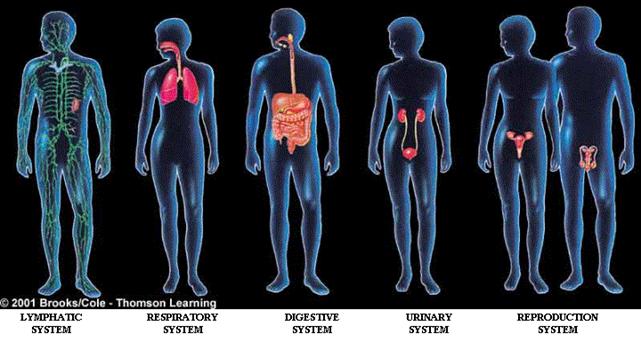
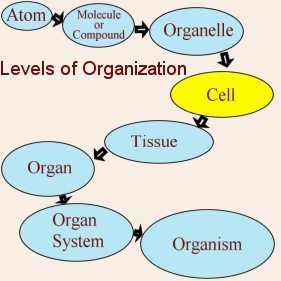
In summary the body is organised in the following way:
We thank our friends at PromoCodeCoupons.co.uk for support LeavingBio.net!